ISO 27001 | ISO 42001 AI Governance | Official Zoho Partner
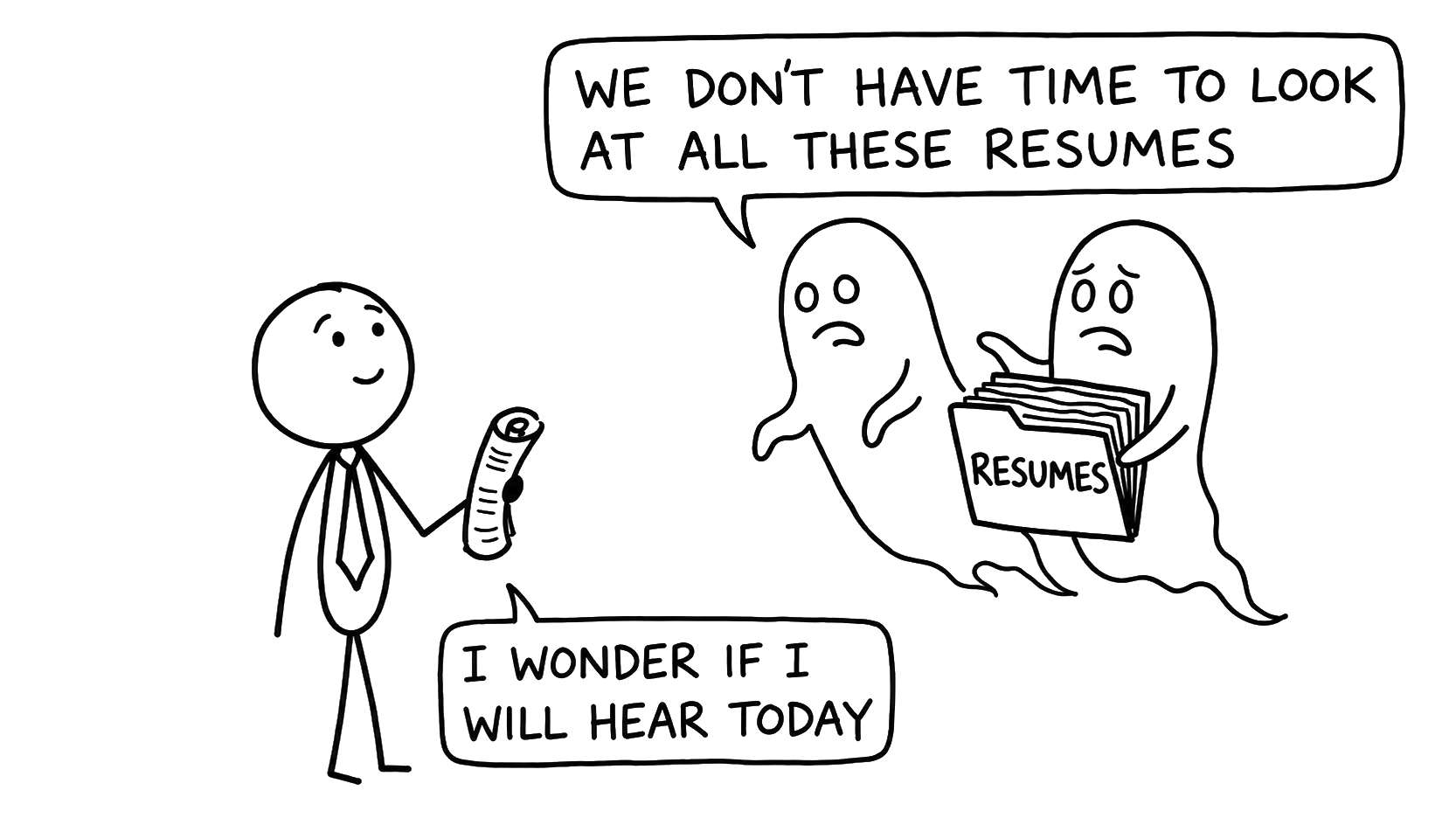
Ghosting is causing mental stress

Being ghosted during a job search is deeply stressful. The abrupt silence often triggers anxiety, self-doubt, and financial worry, as your brain translates the ambiguity into personal failure. However, remember that ghosting is almost always caused by internal corporate delays, tech algorithms, or high application volumes, rather than your actual qualifications.

What starts as feelings of anticipation to hear back about a job opportunity turns into a longer feeling of uncertainty. We feel more vulnerable as time goes on, which then alerts our natural instincts to search for danger or risk. The more time passes, the longer we’re left in this feeling, which instigates stress and wears down our own self-confidence.

Fairness In Recruitment Is Now Under Legal Scrutiny.

Fairness in recruitment is under severe legal scrutiny as employment laws evolve and the use of automated technology introduces new complexities. With increased litigation around algorithmic bias and expanded worker rights, ensuring recruitment processes are strictly objective and compliant has become a critical operational priority.

The recruitment landscape is experiencing a massive shift in compliance and regulatory focus:

The AI and Algorithmic Tech Threat: High-profile legal cases, such as the class-action lawsuit Mobley v. Workday, have put AI-driven resume screening and applicant-tracking algorithms directly under the microscope. The Information Commissioner’s Office (ICO) treats automated decision-making in recruitment as a top regulatory priority, investigating employers to ensure AI vendors aren't introducing illegal bias into talent pipelines.
June 2026 update mobley v workday

https://hrexecutive.com/judge-refuses-to-dismiss-most-workday-hiring-bias-allegations/
Common Questions About Our Compliance

Question Smart Sifty Response
How is bias measured? Smart Sifty excludes personally identifiable information (PII) from candidate scoring. Attributes such as name, age, gender, nationality, email address, mobile number and postcode have no influence on candidate rankings. Our models are independently assessed for bias every month, and customers can access bias assessment reports.
How are scores generated? Candidates are assessed across eight weighted categories aligned to the job requirements. Categories are weighted according to their importance for the role—for example, work history carries a higher weighting than certifications, where appropriate.
How do you train your models? Approximately 97% of Smart Sifty's decision-making is deterministic software logic, providing consistent and repeatable results. AI components operate within predefined rules rather than learning from customer recruitment data. Customer CVs and hiring outcomes are not used to retrain or improve the models.
Do you store resumes? No. Candidate resumes remain within the customer's existing ATS or database. Smart Sifty processes the information without permanently storing candidate CVs.
Can recruiters override the AI? Yes. Recruiters remain in control. Smart Sifty analyses the job description and structures it into editable categories—including mandatory requirements, preferred requirements, languages, responsibilities and benefits—which users can review and modify before candidates are assessed.
Is every recommendation logged? Yes. Every candidate assessment is logged with the candidate's score, assessment details and timestamp, creating a complete audit trail for review and compliance purposes. This is stored in ATS candidate records.
Is there model versioning? Yes. Customers can choose between two assessment models: Aurora and Meridian. Both models undergo monthly bias assessments, with reports available to customers. Feature updates are released quarterly and undergo penetration testing and quality assurance before deployment.
How are prompts stored? Smart Sifty does not use prompt-based workflows or prompt engineering as part of its candidate assessment process.

“ Having run a tender process to adopt new technology for our workforce management system. We selected Smart Sifty because of its, fairness compliance and governance layer in screening candidates” Large UK Public Sector MSP

WHY AI FAIRNESS & GOVERNANCE MATTERS

The Hidden HR Compliance and Security Time Bomb

An executive briefing exposing how AI-driven hiring systems are creating a convergence of legal, reputational, and cybersecurity risks for employers using ATS and CRM platforms.

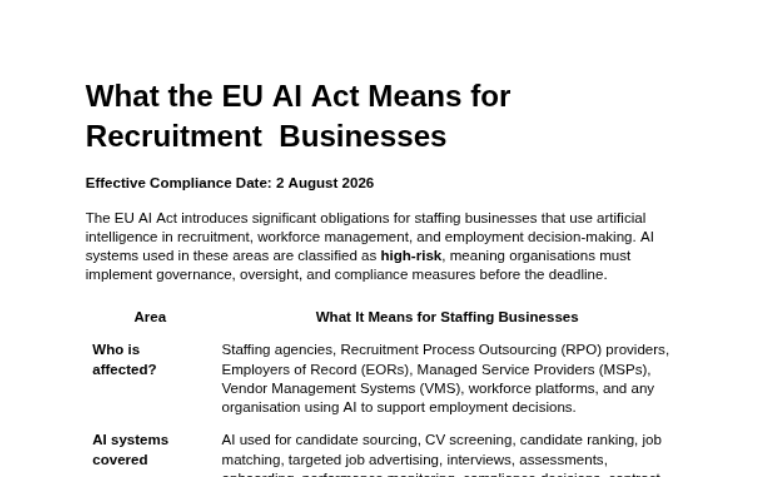
EU AI Act Guidelines — Practical Interpretation & Enforcement

Official EU guidance clarifying how the AI Act should be interpreted and applied in practice, including risk classification, compliance expectations, and enforcement principles.

Workers’ Rights and Labour Protection in the Age of AI

An analysis of how AI-driven systems are reshaping labour relations, examining risks to workers’ rights, workplace fairness, and the need for updated regulatory protections.

Building Effective AI Governance

A practical guide explaining how organizations can build effective AI governance frameworks to manage risk, ensure accountability, and support responsible AI adoption at scale

Governing AI with Humanity

An in-depth exploration of how AI governance frameworks must prioritise human values, accountability, and societal well-being alongside innovation and efficiency.

The Annual AI Governance Report 2025 — Steering the Future of AI

A comprehensive 2025 governance report examining how organizations are structuring oversight, accountability, and risk controls to steer AI development responsibly.